ICAAL 13
The 13th International Conference on Austroasiatic Linguistics (ICAAL 13) was held in online format via Google Meet over three days, October 29-31, 2025.
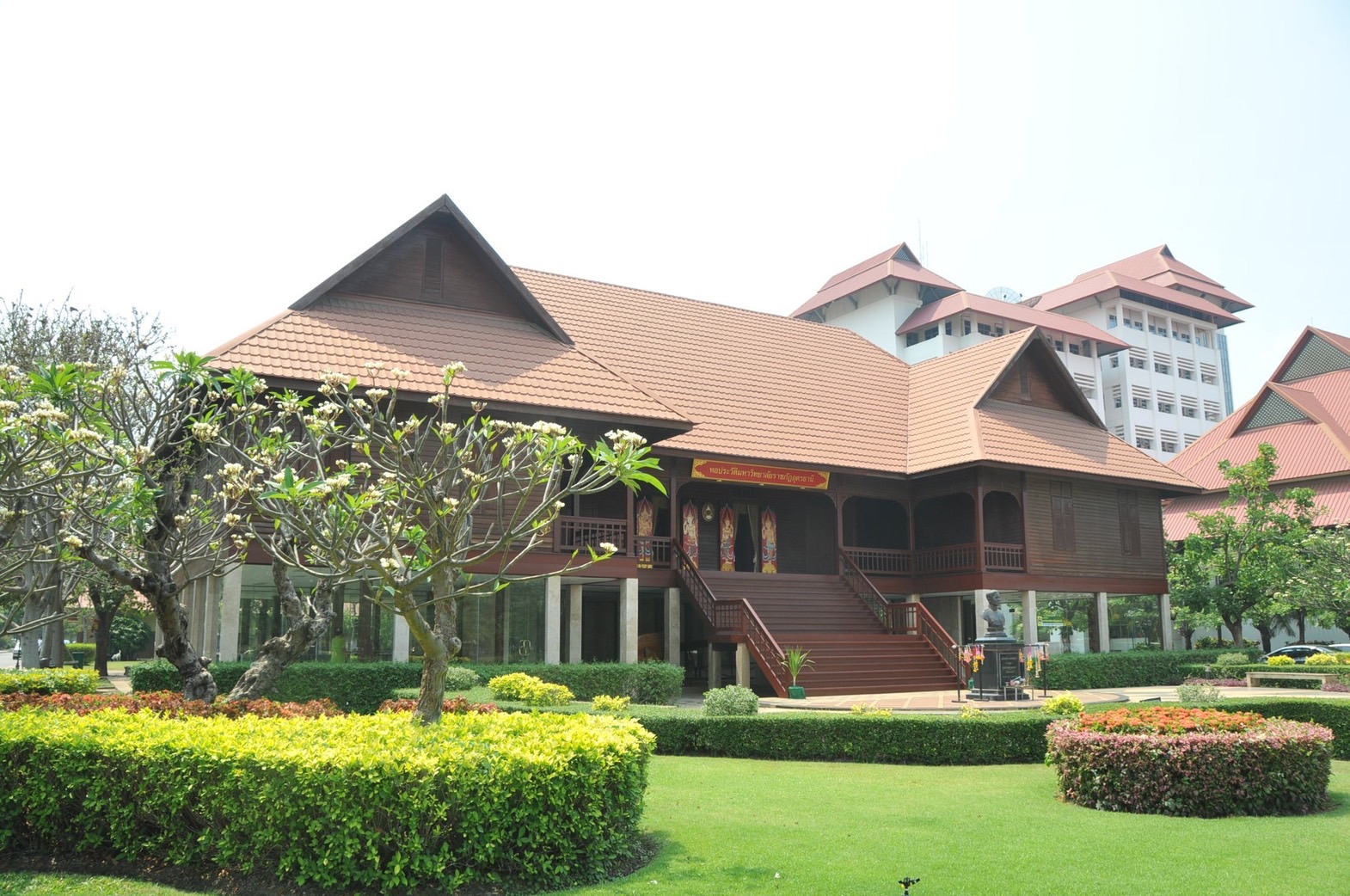
Those who submitted abstracts overwhelmingly indicated a preference for online participation. In response, the organizers decided not to go ahead with an in-person meeting this year. We want to thank the Faculty of Humanities and Social Sciences, Udon Thani Rajabhat University for their willigness to host the meeting.
Conference Archive
ICAAL13 Conference Presentations
Videos and slide presentations from the 13th International Conference on Austroasiatic Linguistics.
| Presenter(s) | Title | Resources |
|---|---|---|
| Conference Session | ICAAL13 Business Meeting | |
| Conference Session | ICAAL13 Day 1: Opening Remarks and Book Launch | |
| Albert Badosa, Tạ Thành Tấn, Trần Quang Minh | The tonemes of Malieng | |
| Clarissa Rajee, Ruth Rymbai | Writing with Feeling: Paralinguistic Strategies for Emotion and Intonation in Khasi YouTube | |
| Evarisha Syiem | Capturing Khasi Voices: Language Documentation Through Folktale Storytelling | |
| Evgeniya Renkovskaya | On the Etymology of the Word kıttuŋ ‘god’ in Sora | |
| Gamidalah War | The Grammatical Role of Aesthetic Components in Pnar Discourse | |
| Hiram Ring | Word order in Austroasiatic: Evidence from a parallel corpus | |
| Hyung-Soo Kim | The origins and development of the so-called incopyfixation in Aslian languages | |
| Imontre Sutnga | Dearth of Case Marking in Noun Incorporation in Pnar | |
| Irina Samarina, Sergey Dmitrenko | Causative Constructions in Tampuan | |
| Le, Thi Kieu Van | Digital Multilingualism in Vietnam’s Austroasiatic Communities: Sociolinguistic Insights and English Digital Literacy Innovations | |
| Luke Horo, Gregory Anderson | Outstanding issues in Santali vocalism and vowel harmony | |
| Mark Alves | Vowels in Early Chinese Loanwords in Vietnamese with Comparative Data from Vietic | |
| Mathias Jenny, Han Tin, Rachel Weymuth, Alexandra Herdeg | The Htanaw noun phrase: Relative expressions | |
| Mayumi Adachi | Topicalization in Vietnamese: A reinterpretation of the “double subject” | |
| Nathan Nguyen | The Sound Changes of D in Vietnamese | |
| Nathaniel Hiroz | Proto-Khmuic Presyllable Contrasts | |
| Ngaineiting Baite, Rajakrishna M, Hilal Ahmad Dar, Thokchom Sandeepkumar Singh, Naorem Brojen Singh, T. Mahendar Reddy, Elangbam Sharatkumar Singh, Shruti, Anjali Steephan, Sujoy Sarkar, Arun Ghosh, Shailendra Mohan | Exploring the Pronominals in South Munda Languages: A Comparative Study | |
| Nguyen Duc Long, Luong Thi Hien | Symbolic Naming in Vietnam’s Urban Landscape: Language, Identity, and Aspirational Discourse | |
| Paul Sidwell | Au revoir *oa – moins c’est plus | |
| Pawarut Kratognok | Contact-Driven Phonological Divergence in Lawa: The Role of Internal Change and External Pressure | |
| Phan Trần, Xin-Tian Lau, Wei-Tien Dylan Tsai | On Applicative Constructions in Vietnamese and Some Southern Chinese Varieties | |
| Rachel Weymuth | The intensive prefix kʌp- in Rumai Palaung | |
| Roger Blench | Traps and Trapping in Early Austroasiatic | |
| Ruth Rymbai, Barika Khyriem | The distribution of pitch accents in Khasi Intonation Structure | |
| Ryan Gehrmann | Vowel Length and Glottalization in Proto-Austroasiatic “Open” Syllables | |
| Rymphang Rynjah, Sarah Lyngdoh | Phonetic Analysis of Whistling Names in Kongthong: Patterns and Contexts | |
| Shane Devereux, Ryan Gehrmann | Tone and Syntactically Conditioned Tone Alternations in Vax (En): An Acoustic Study | |
| Sireemas Maspong, Patrick McCormick, James Kirby | Revisiting register contrast in Mon: production and perception | |
| Tobias Weber | Towards a diachronic typology of Nicobarese languages: uncommon features in the Austroasiatic context and how they can be explained | |
| Umarani Pappuswamy, Gamidalah War, S.Sulochana Singha, Vidyarati Joshi, Sujoy Sarkar, Aleendra Brahma | A Phonological Sketch of War-Jaintia |
Program
ICAAL13 Conference Schedule
International Conference on Austroasiatic Linguistics
Book Release:
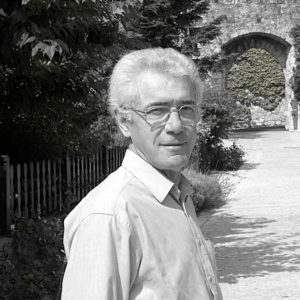
Austroasiatic Linguistics in honour of Michel Ferlus (1935-2024)
This book will be available to download free of charge here on icaal.net after release
At ICAAL 12, the ICAAL community resolved to produce the next edited volume in the Austroasiatic Linguistics series in memory of our departed colleague Michel Ferlus. We are pleased to announce that Austroasiatic Linguistics in honour of Michel Ferlus (1935-2024) will be released at ICAAL 13. All registered participants have had the option to purchase a print version of the book, and a pdf version will be made available here on ICAAL.net after the conference. We would like to thank all those who have contributed to the the volume through contributions, reviews and editorial service.